The Last Picture Show Reflection

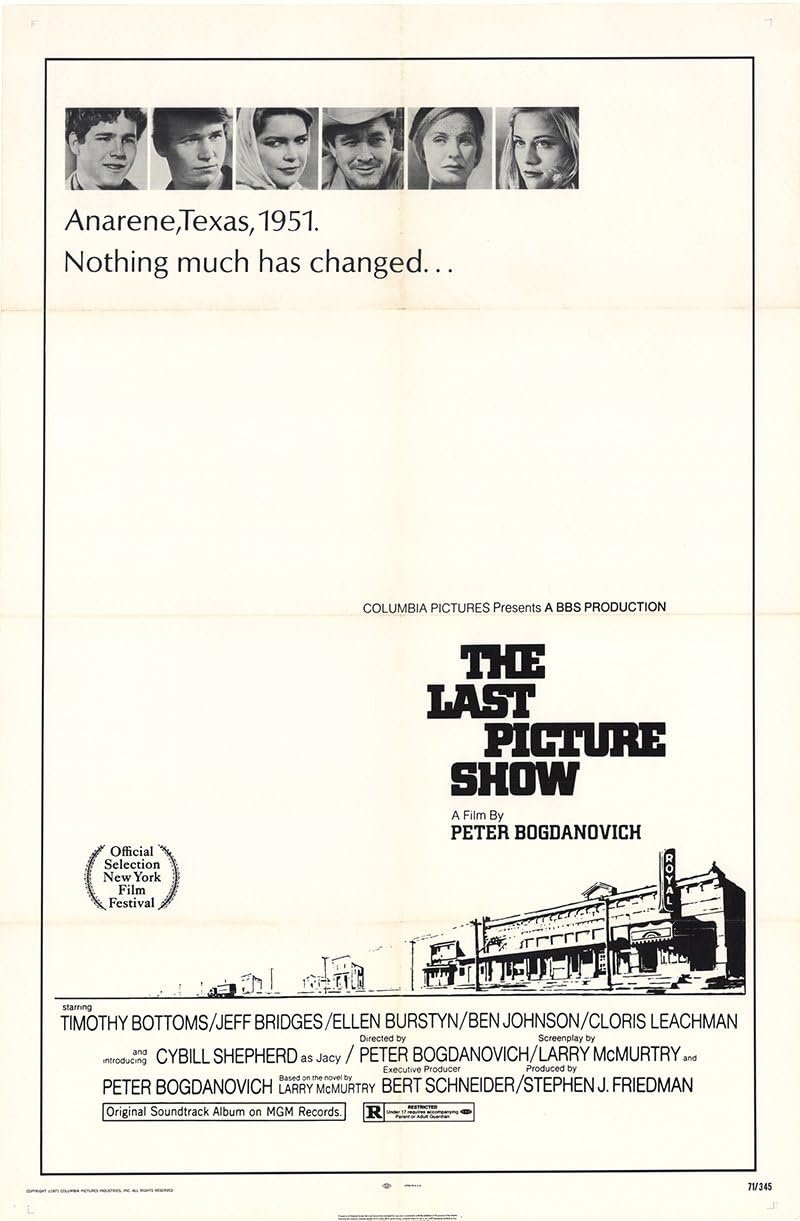
Where to begin about this movie. I guess I can start with my main thoughts about the film. I thought The Last Picture Show was just okay. I really liked the idea of this film and the exploration of the sexuality of teens in a time period that had “wholistic values.” I got to watch this movie with my family and it was nice to watch something with my family, but I had many problems that personally made this movie hard to watch.  

I have stated before in many of these reflections that I love flawed characters. In my opinion, you have to a less have some redeemable characteristics to be a flawed character. Most of the characters in The Last Picture Show were kinda awful. I think the only people I actually liked was Duane (the great Jeff Bridges), Billy, and Jacy’s mom, a little bit. Jacy was actually the worst. I hated her. I wrote in my notes a quote that I think sums up my thoughts on her. I said, “You take off your clothes once and you lose all your likeability.” You think throughout the film that she will maybe be better when she comes to her senses, but she doesn’t, she also sleeps with older men, as a teenager, which is inappropriate and gross (Sorry you will hear the word gross so many times). Sonny slept with a married woman as a teenager, which you guessed it is gross and then ditched her for Jacy, which is kinda awful. Ruth slept with Sonny who was a teenager. The adults of the town were ignorant and condescending to the kids of the town. Which I guess in a way that is kinda a staple for the coming of age family.

One thing did honestly like about the film was the subject matter of the film. The Last Picture Show shows a graphic depiction of growing sexuality in a small town. Which was interesting to see get explored. Most of these relationships were not at all legal and in my opinion easy to watch. But, I give brownie points to the film for being brutally honest about their characters and how horny they are. 

The Last Picture Show is a film about the end of childhood. You can see that throughout the film and the giant shift of tone between the first and second half. The first half of the film sees Sonny and his friends explore relationships, places, and sex. You see the characters go to the movies, town dances, parties, and fishing. The tone of this first half seems very lighthearted. That all changes when they graduate high school and the death of Sam the Lion. We see these characters suddenly get thrusted into adulthood so quickly. Sonny is given the pool house and I think care of Billy (I really don’t know). Jacy is dealing with not being the center of attention anymore and Duane is going to Korea. The events of the second shift to a bleak tone and even sad, like the end of childhood and growing up. We see this in one of the final scenes in the film, where Duane and Sonny go to see the last picture show at the town’s movie theater before Duane goes off to Korea. The movie theater was a pivotal part of their childhood and it was closing. This scene symbolizes the closing of that chapter of their life and going to a new one, adulthood. 

Growing up is a hard and confusing time for all of us. We are trying to figure out who we are, the world, and our place in the world. That is what I believe this film is truly about. It is about the end of childhood and figuring out what the next stage in life is and how to deal with it. In the end, it depends on how you accept that change in your life.   

The 400 Blows Reflection

The 400 Blows was definitely more of my type of film. It was a very character-driven movie and the main character was human and had flaws. It was a simple film with a simple plot. I wonder if this film was inspired by the style of the Italian Neorealism movement. I saw many similarities between the two when it comes to the style of the film. Italian Neorealism tends to have a simple plot following an everyday person and their everyday life. The 400 Blows follows this format. The film follows a french boy Antoine Doinel as he deals with the unsympathetic adults in his life as he plans for a better life. The 400 Blows is a perfect example of the coming of age film.

I personally love coming of age films. That could be because I am twenty years old and I’m in that phase in life where those films apply to. My favorite films at the moment are Call Me by Your Name and Little Women and those are both coming of age films. The 400 Blows reminded me of one coming of age film more than the others.   

This film reminded me a lot of Rebel Without a Cause. Both films follow teenage boys and the relationships between adults in their lives. Both Antoine Doinel and Jim Stark are considered troublemakers and were in the eyes of the law. The characters both are constantly ridiculed constantly about their choices and how bad they are for society. Jim and Antoine both are under constant pressure to conform to society but want to maintain their individuality. There are differences between the two as well, but I thought they had a lot in common. 

I think the reason that I love the coming of age of films is the perspective of a singular person, usually a teenager. We see into the character’s personal life and how they shape into the person they turn into. When we are younger we think about the future in such a different manner then we do now. The characters only think in the moment, something I have always admired. In The 400 Blows, Antoine Doinel and his friend, Rene decided to not go to school and to have a day of fun and they don’t really think of the consequences. Another example is when Antoine ran away from his house, he made decisions in the moment and it leads to many bad choices.

This movie is about Antoine and his character. His parents don’t listen to him and he is constantly the scapegoat and is not having the adequate positive attention that he needs. This results with him making bad choices. We see Antoine in his everyday life and there were multiple times when we as an audience say he is just a kid. That I believe was the point of this film to make people realize how human these kids are. They are there own person and they make mistakes. Adolescence is such an interesting phase in life. You’re stuck between adulthood and youth. The future and the past, the ocean and the land.                  

François Truffaut inspired by his own troubled childhood created this film to shed light on the youth of Paris and what life is like for them. This is shown in cinematography and the mise en scene of this film. It was a very atmospheric film and the city of Paris felt like a character itself. The camera work was not fancy at all, which made the whole movie feel entirely natural. The 400 Blows is a fantastic character study in the harsh reality of growing up in a society where you are just a problem. A problem that people are eager to figure out and not wondering how it became a problem in the first place.    

North by Northwest Reflection

When I signed up for this class, to be honest, I thought that our Alfred Hitchcock would be Psycho, Rear Window, or Vertigo, but we got something very different than any of those, North by Northwest. In my opinion, This movie was very different than Hitchcock’s other backlist films. Maybe I’m just not as educated in Hitchcock’s film, but I thought that most of his films where thriller/horror films. North by Northwest was strangely comedic and it didn’t feel like Hitchcock’s movie. It wasn’t spooky or even thrilling it was just average. 

The thing that stood out to me was how extra some of the elements of the plot of this film was. I wrote in my notes that perfectly summarizes North by Northwest, I wrote: “ Hi my name is North by Northwest is my name and being extra is my game.” The famous cropduster scene, for example, was very extra. I mean realistically, would you really hire someone to kill another person by running over them with a cropduster. NO! You would hire some to shot them. It is so much more work than necessary. Another example is the whole fight sequence on Mount Rushmore was also very extra as well. I think Rushmore is not that flat, I could be wrong, but I don’t think I am. 

One thing I did like was the mise en scene of the movie. The technical aspect of the film was impressive for 1959. The cropduster scene even though it was extra it was amazing with being able to look like a real cropduster was chasing him. I also loved the shot with Eve’s purse where we saw the contents of it. It showed the audience what Eve was really was, with the secret message and the gun. 

One thing I didn’t like about the movie was Eve’s character in general. The film set her up to be a femme fatale that used her looks to get what she wanted. She was set up to be a badass woman who needed no man. But, halfway through the film, the tone of her character changed completely. She went from one extreme to the other because she fell in love with Roger. I feel like Hitchcock intended for her to be who she was in the beginning, but had to change her to fulfill what the studios wanted. Also, on another note, I honestly didn’t like all the slut-shaming on Eve. I really didn’t care about Eve all that much, but nobody should be talked to the way that Roger talked to her and I know I definitely would not go back to the person who said those things to me.   

In my opinion, North by Northwest was an experiment to see how much, Alfred Hitchcock could get away with, with the restrictions of the studios. This is prevalent in the amount of sexual content or implied sexual content in the film. For example, the conversation between Roger and Eve on the train, they are obviously talking about sex without deliberately saying anything. In conclusion, North by Northwest is not the film I thought it was going to be. Even though, I was not a big fan of the characters and the extra plot, the fundamentals of the mise en scene really shine as well as the amount of the beating around the bush of sexual content.                           

Complicated Women Reflection

I really liked this documentary. I have said many times the thing I learned the most this year is that history was never liner it was more complicated, it dips and rises. Complicated Women cemented my thoughts exactly. This documentary exploits the female characters of the Pre-Hays Code era. 

Many of these movies and characters are so complex and modern to even today’s standard. Like movies with abortion, prostitutes, and even single mothers. These films weren’t uncommon they were made frequently and were enjoyed by many audiences around the world. I even would want to see movies, today. I have never really wanted to see any pre-code era films, but the themes of these films are more complex than I thought, especially the women in the films.

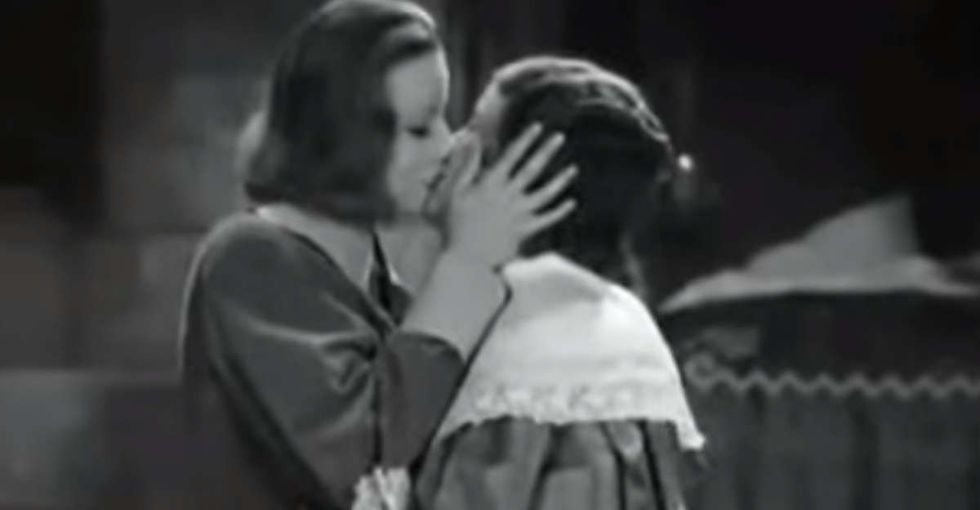
The idea of a complex woman was portrayed very often in these films. I think about a quote Little Women (2019) when I think about women Jo March says “Women, they have minds, and they have souls, as well as just hearts. And they’ve got ambition, and they’ve got talent, as well as just beauty. I’m so sick of people saying that love is all a woman is fit for.” These films embody this quote wholeheartedly with the characters being layered and having a personality and sexuality. For example, in the film Queen Christina, the main character is a bi-sexual ruler, who takes many lovers. Women could be portrayed as criminal masterminds and doctors and seductresses. It is crazy how far, creative expression was cut back.

During the Hay’s Code, women were extremely suppressed in creative expression. It is such a shame that women were getting their feet wet in full creative expression and get put in cages again. Due to the Hay’s Code complex and complicated women are suppressed and turned into flat characters that are only capable of being love interests to the main actor. 

I like my stories to be character-driven and the flater the character the more not interested I become. So, it is shocking to me that these films are full of complex characters with realistic plots and flawed actions with consequences. I have always taught that films before the ’70s were full of flat characters, but this documentary showed that was wrong. The complexity of women has always been in film it was just silenced for thirty years.                        

Reflection for Rashomon

I really didn’t like this movie all that much. The storyline was interesting, but after a while, I found the plot dragged in places and I didn’t really care about the characters and to me, I find the characters are the most important part of the story. I am the first to admit I like flawed protagonists, but I had nothing for the characters. I did like though the idea of the story. The multiple perspectives were an interesting storytelling device that inspired many movies and books. I also find it cool that Rashomon even had a term coined after them, the Rashomon effect.

Something that really stuck out to me was the lasting effects of lying or prejudice against people due to their past choices. Throughout the film, we see the perspective of three people in the murder of a samurai and assault of his wife. We as an audience don’t really know who is telling the truth and who is lying. Each story has similar facts with slight lies. These perspectives changed the woodcutter and the priest’s views on humanity and the soul of a person. 

The priest and the woodcutter share completely different views when it comes to sin and what it does to your soul. The priest believes that lying and deception tarnish the soul, while the woodcutter doesn’t believe that. The woodcutter believes that there is a reason for sin. This shown when the commoner states that leaving the abandoned baby is a sin, and the woodcutter responded to the commoner with him having to imagine what the parents had to go through to give up their baby. The priest lives in a black and white world, one where there is a right and wrong way, while the woodcutter lives in the grey area. For example, the priest changed his own thoughts about the woodcutter when he learns that he stole the dagger from the murder scene. However, that changes when the woodcutter takes the abandoned baby to raise it as one of his own.

Even though I wasn’t a big fan of this movie, I loved the message behind it. That message is that we need to realize what causes us to lie and what causes us to lie. Rashomon also allows us to walk away knowing that we can’t judge a person’s character over the sins that they make. Our souls can change and that is a core theme of this film.

Reflection for Citizen Kane

 When you think of what movies are the most beloved of all time, what do you think of? The obvious answer is Citizen Kane. Many film critics consider the movie the greatest film of all time. Citizen Kane influenced and continues to influence today’s pop culture. For example, I think everyone has heard the catchphrase “Rosebud” at least once. So what is rosebud? 

In Citizen Kane, we follow the life of Charles “Charlie” Kane, through testimonies of people close to Kane to find the meaning of Kane’s last word, rosebud. Some of these testimonies include Kane’s wife Susan, his friends Mr. Bernstein and Jedediah Leland, and records of Walter Parks Thatcher, his guardian. Even though we learn about Kane through these testimonies, Thompson, the reporter, concludes that he is unable to solve the mystery and that the meaning of Kane’s last word will forever remain a mystery. The audience soon realizes the meaning of that word when we see that his childhood sled, which was named Rosebud. So what does rosebud mean?

When looking at Citizen Kane, you can see the rise and downfall of Charlie Kane. The root of this downfall comes down to money. For example, when Charlie and Susan got married, Charlie showered Susan with gifts and singing lessons, which turned the relationship sour. Susan ends up leaving Kane because his money was the only thing he would give her. If you look at all the relationships Charlie had made most or all of them were destroyed because of money or his pride. So, in my opinion, Rosebud simply means the loss of  Kane’s childhood. Life is so much more simple when you don’t have to worry about money and can just be a kid. Money didn’t improve Kane’s life it ruined it. So in a way, I believe that Kane yearns for the simple life over one of money and pride. I also found it very ironic that out of all the expensive objects he could have, the most important to him was an old sled.  

Citizen Kane also along with Rosebud created very prominent ripples in today’s pop culture. My first thought of this is the Simpsons episode Rosebud. The episode is chalked full of references to Citizen Kane to the episode title to the childhood attachment to a toy. Major movies were also inspired by many scenes of Citizen Kane like the Wolf of Wall Street. Some aspects of the film that stood out to me were the narrative format and the shots. Many of the iconic shots show what an enigma Charles Kane was like the speech scene where they used camera work to make Charles Kane look larger than other people. The stand out to me was the narrative in general. I love character development in film as well as the flawed human being troupe. So, I liked the character of Charles Kane and his story of success and failure. I think Citizen Kane inhibits the thought of what really is success and the meaning of life. Is it money? Is it happiness? Is it the relationships you create?  Is it who is with you when you die? These are all questions that Orson Wells tackles in the film in a different type of narrative. Citizen Kane is a film that defied cinema and society in general. It continues to be the film to surpass all films and will always be the example of classic American cinema.

Reflection: The Grand Illusion

The Grand Illusion is often branded as the antiwar film and they are not a hundred percent wrong but in my opinion, the film is about the war to some degree. For a movie about war, it is not about the casualties and bloodshed, but about the people of war and relationships, one could make in it. The Grand Illusion follows Le lieutenant Maréchal and Le captaine de Boeldieu as they become prisoners of war during World War One. Lieutenant Maréchal and Captaine de Boeldieu along with other prisoners attempt to escape the POW camp multiple times. Resulting in Lieutenant Maréchal and another prisoner, Rosenthal escapes an “inescapable” prison. The two men eventually meet a kind german woman named Elsa and she shared her hospitality with the fugitives. The film ends with Rosenthal and Maréchal escaping into Switzerland. The Grand Illusion is a film known to be one of the best films of all time with a powerful message about not war but the people of the war and how the people are affected by the war.   

I personally thought the Grand Illusion was a just average movie. Maybe, I was just in a mood that day, but I thought that the message was revolutionary for the time, but I didn’t like the tone, that much. This film had two clearly different tones. The first two-thirds of the film’s tone is tense, while the last third the tone is more light-hearted and family esque. It is a huge shift in tone and I found it jarring.

I did on the other hand like the camera work of this film and the framing of shots. Some shots that adored were the singing scene with the crowd of soldiers during the play, the trudging of the snowy mountain at the end, and the cross dressing scene. The movie felt long when the film is in the POW camp and that is due to the short scenes at the camp. The scenes are brief and full of information. This way of filming makes the audience feel like we are at the camp and how long and excruciating the stay is. In other words, we are in the mindset and we realize how much we want to escape with the prisoners and get to something more exciting.

The highlight of the film for me is the relationships between the characters in the film. When you look at the formula for any movie, there is a protagonist and an antagonist. But, in The Grand Illusion, there is not a clear protagonist and an antagonist. The characters all interact with each other. I wrote in my notes a lot about teamwork and you can see it in the film when the prisoners work together to escape the camp. The prisoners are from all different walks of life. The characters on both sides of the war know and have some type of respect for one another.The characters also come from different religions and are helpful as well as humans. That is the reason I think Hitler named it Cinematographic Enemy Number One due to the fact that everybody is equal. They are only their duty in this war and everybody has a role to play. Both sides want the war to end and are just existing in this world all trying to get to end.           

Even though I was not the biggest fan of this movie, I can see why so many people like it. It has strong themes of the class system and religion. The history of the film alone is extremely interesting. In general, the themes are on point and the camera work is amazing. If it wasn’t for the fact that the film felt like two different movies then maybe I would like it a little more.     

The last shot of movie
The singing at the play scene
the cross dressing scene

Chapter 4 Journal: What is Narrative?

My favorite movie: Call Me By Your Name (2017)

Question 1: What are the diffrences between omniscient and restricted narration?

a. Omniscient narration means that the narration knows all and can tell us whatever we want to know. Restricted narration is what it sounds like restricted, meaning that the narration has limits on what it tells us, the audience.

Question 2: What is the Climax and how does it relate to the pursuit of the goal?

a. The Climax is when the character faces a major obstacle. The climax is the result of the protagonist taking a great risk, like a sacrifice or overcoming a personal flaw. The climax also leads to the resolution.

Question 3: What is meant by the diegesis of a story? What is the difference between diegetic and nondiegetic elements in the plot?

a. The Diegesis is the world of the story. The difference between diegetic and nondiegetic is that diegetic elements are the events, characters, objects, settings, and sounds that from the world and nondiegetic elements that are things outside the world such as the score, titles, credits, and voice overs.

Question 4: What is the difference between suspense and surprise? Which ones is more difficult for a filmmaker to make?

a. The difference between suspense is more drawn out and harder to make in the view of the filmmaker, while surprise is more short-lived and shocking.

The Reflection for The Cabinet of Dr. Caligari

Fun Fact: The character of Caesar was the inspiration for DC comics the Joker

For a movie that was made almost a hundred years ago the film, The Cabinet of Dr. Caligari feels utterly modern and something that could be pasted to today as a cult classic. The film is a German Expressism film by Robert Wiene and considered to be one of the first true horror movies. The story is essentially about two men, Francis and Alan, who go and see a man named Dr. Caligari and his somnambulist, Cesare, at a fair. Cesare is marketed as a man that can predict the future and tells Alan that he will be dead in the morning. When this prediction becomes true, Frances searches for the truth between Cesare and Dr. Caligari and the murders plaguing the town of Holstenwall, Germany. The search though turns out to be all fictional when it is revealed that Frances is indeed crazy and was making it all up inside an Insane Asylum. With a hundred percent score on Rotten Tomatoes, The Cabinet of Dr. Caligari is certainly a masterpiece and still is shown as a revolutionary film of the time.

The aspect that certainly stood out to me was the design that went into each character, especially the characters of Cesare and Dr. Caligari. Both of these characters are made to have exaggerated makeup and dark clothing to give the audience an unsettling vibe. The body movement of these characters also adds the uneasiness. For example, in the kidnapping scene, Cesare has very slow and jagged body movements to show how inhuman he is. To juxtapose Cesare and Caligari, Jane has lighter clothing and less exaggerated clothing to show that she has an innocence about her. Another part of the character design of Jane is kinda unique is the hand-tinting of the pink color in her scenes. This was an interesting stylistic choice for Wiene since none of the other characters have a particular color tint. 

Speaking about the design, the set design was extremely modern and edgy. I like all the angles in the set. It made the whole film feel uneasy and fantasy-like. The camera work is also something remarkable. The use of shadows was transformative to plot and tone to the movie. I also loved the many different uses of the iris shots and slope long- shots. These camera shots really added layers to each scene as well as, the tone of the film. Even though the score varies from version to version, I feel that Rainer Vierttblöck did an extremely good at capturing the overall tense and uneasy tone of the movie. I also loved the adding of the sound of things like the creaking of the opening of coffins and doors. I believe that the film has a connection to World War and trauma that soldiers had to ender. 

The Cabinet of Dr. Caligari debuted in 1921, just a few years after the First World War ended in 1918. It is very plausible to think that the character Cesare could easily represent the common solider and Dr. Caligari the armed forces. When you look at the Cesare he is a somnambulist, which means he is in a sleepwalking type of state. When Dr. Caligari forces him to act, he acts just like a soldier would have to do. He is told to wake up, he wakes up.  He is told to kill, so he kills. This could explain why Frances is in the Insane Asylum at the end of the movie. Many soldiers had a hard time processing the horrors of the war and this fantasy of the doctor could have been a way for Frances to process the horrors of the war and the death of his friend and fellow soldier, Alan. It is a lot easier for a person to think their life is being controlled by someone else versus yourself doing these crimes. 

I really liked this movie and it changed my mind on silent films in general. It’s the cool set design and the character design is really different and modern for the time period and by far the standouts for me. I feel like the message I got out of The Cabinet of Dr. Caligari is one about war and what war does to someone. 

Example of the Pink Tint on Jane
The use of light and dark color as symbols
Example of the Set design

The Social Power of Film Reflection

Week 2 Reflection 

Film has always had the power to bring people together through messages that the film portrays. Since the beginning of the history of film, filmmakers have been able to connect audiences to reality like the Luméire brothers or to create stories to entrain audiences like Georges Méliѐs and Alice Guy Blanché. The filming of reality like the Luméire brothers allowed the audience to realize the beauty of everyday life and stories like Georges Méliѐs’ Trip to the Moon allowed an audience to escape everyday life and be entrained.  Because of these filmmakers, social messages can be conveyed to a large audience. 

Some movies can even cause a cry for social change. For example, The Birth of a Nation directed by D.W. Griffith sent a message of racism and caused an increase in segregation in the United States. The Birth of a Nation caused two different movements. The first movement allowed the rebirth of the Ku Klux Klan. The film portrayed African Americans as wild animals, with African Americans raping women and the KKK saving the day, by stripping the African Americans of their guns and running them off. The Birth of a Nation is a problematic film, morally speaking. To this day the film is used for recruitment for the Ku Klux Klan. The release of the film also caused early African American civil rights advocates to protest the movie. This protest is known to be one of the first protests in the civil rights movement. 

There are also many other movies that challenge society for change. The work of documentaries can be used to show a topic that could use social change. For example, the new Netflix documentary series, The Pharmacist, is about a man that is looking for justice for his son that died from opioid addiction. This documentary series discusses the rampant use of opioids in the United States and is used to show the audience/society the social threat that it causes. Some other documentaries that inspire to cause social change are Food. Inc and Paradise Lost. Documentaries are a common form to relay social messages to cause a social change. 

All forms of media can cause social change and be revolutionary in the ways we view society. Whether you want to change the world for the better or want to point out the flaws of society, media is one of the best ways to allow your message to be heard. Books and movies like Little Women and To Kill a Mockingbird can show the message of the importance of equality when it comes to gender and race. Film has the power for you to feel immense emotions, such as anger or sadness, and when applying those emotions to society, anything is possible, even social change. 

Design a site like this with WordPress.com
Get started